
Pharmaceutical Industry Basics
For those with a deeper interest in the inner workings of the pharmaceutical industry

Pharmaceutical Products
In terms of the different types of pharmaceutical products, the definition following the Encyclopedia Britannica fits our purpose:
A pharmaceutical [product] is a substance used in the diagnosis, treatment, or prevention of disease and for restoring, correcting, or modifying organic functions.
Readers should note that I have inserted the word product into the definition, as the substances themselves require further processing before meeting the definition. The Encyclopedia Britannica also lists the products that fall into the pharmaceutical category:
Vitamins and minerals (functional medicines)
Medicines
Vaccines
Diagnostics (in vitro):
In vitro diagnostics (IVD) (tests done on samples such as blood or tissue that have been taken from the human body).
Medical devices
Blood components for transfusion
What Is a Drug (Medicine)?
Second on the list are medicines, more commonly also known as drugs in the United States. A drug is defined as containing an accurate dose of a pharmaceutical active ingredient (API), also known as drug substance (DS), in a form that is easy to use and can be effectively administered. To attain the status of a drug, the following objectives must be met:
The drug must be shown to be safe
It must be shown to be effective.
A process for manufacturing must be developed (end-to-end supply chain), along with test methods and controls to assure its quality.
There are two broad categories of drugs (medicinal products):
Small-molecule products—those manufactured using chemical synthesis (industrial chemistry). Aspirin is an example.
Biologic products (biologics)—those manufactured using biological processing of living organisms. A monoclonal antibody (mAb) is an example.
In more recent years, a subclass of biologics has gained traction in the industry, known as advanced therapies in the United States, or advanced therapy medicinal products (ATMPs) in the European Union.
ATMPs comprise somatic cell therapy, gene therapy, and tissue-engineered products.
These are divided into two further subcategories:
Autologous therapies—using cells specific to each individual patient. Chimeric antigen receptor T-cell (gene-modified cell therapy) is a recent example.
Allogeneic therapies—using cells to treat a broad spectrum of patients.
Big Pharma
Prior to the 1980s, there was a single business model for researching, developing, and marketing prescription drugs. These companies were highly vertically integrated across the prescription drug life cycle. Production facilities were wholly owned by the pharmaceutical companies and generally located in every country where the companies marketed their goods. In-house production activities covered the sourcing of raw materials, the manufacturing of all stages required to produce packaged goods, and distribution to hospital and community pharmacies. Supplies for test materials for preclinical and clinical trials would be produced in-house. The staff carrying out the analysis of safety and efficacy results, as the trials progressed, would also be employed in-house, as would all the activities required to submit license applications to the relevant regulatory authority.
From the early 1980s onward, the then large, vertically integrated pharmaceutical companies began to outsource to third parties the activities required to develop new drugs, produce them for clinical trial supplies and commercial sale, and distribute them. This was a major strategic initiative, apparently aimed at reducing the fixed-cost base and passing some of the risk of drug failures onto its suppliers.
The large pharmaceutical companies retained and expanded the existing discovery research and sales and marketing competencies, deeming them core to the business. The result of this strategic realignment was a fundamental shift in the industry structure and the business models therein.
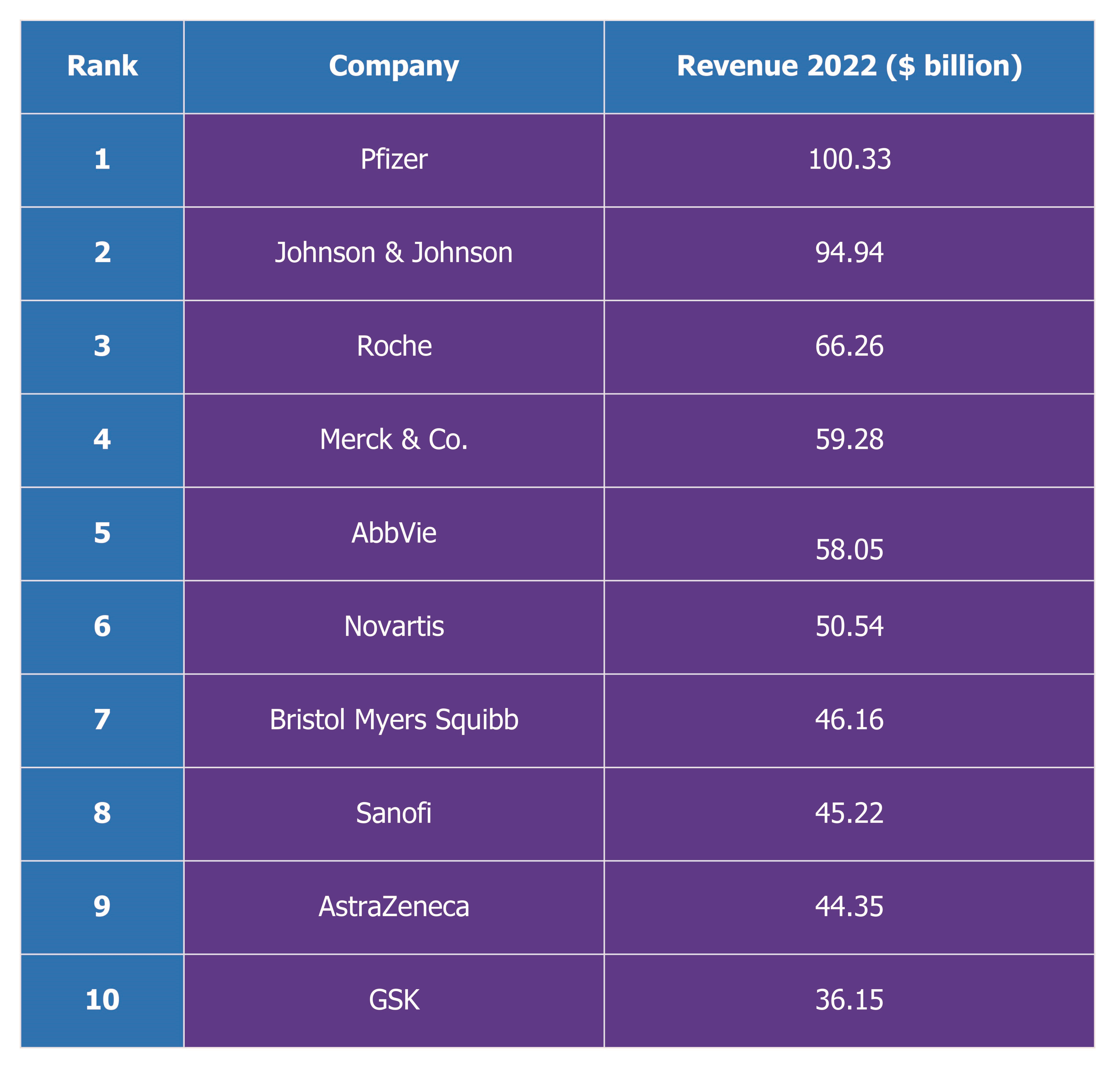
The large pharmaceutical companies, such as Pfizer, Merck, and Glaxo, became known as “Big Pharma.” Their role was to discover molecular compounds and secure their intellectual property rights (IPR), in the event that a molecular compound was selected as a development candidate. The other retained in-house skill sets, sales and marketing, assumed the role of demand creator for products in the development pipeline, along with priming demand for existing marketed products.
Below are the top 10 Big Pharma companies in 2022:
Contract Organizations
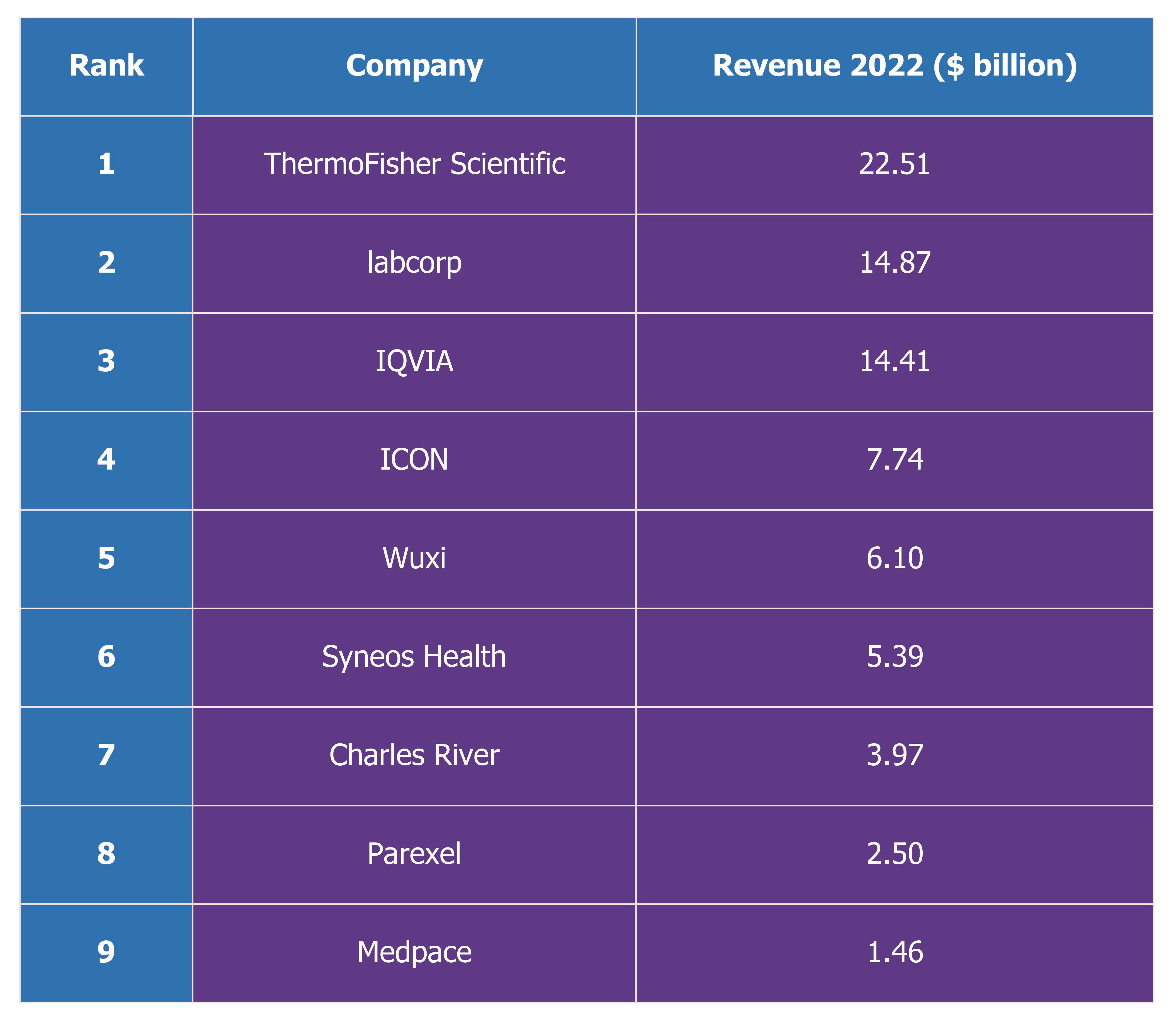
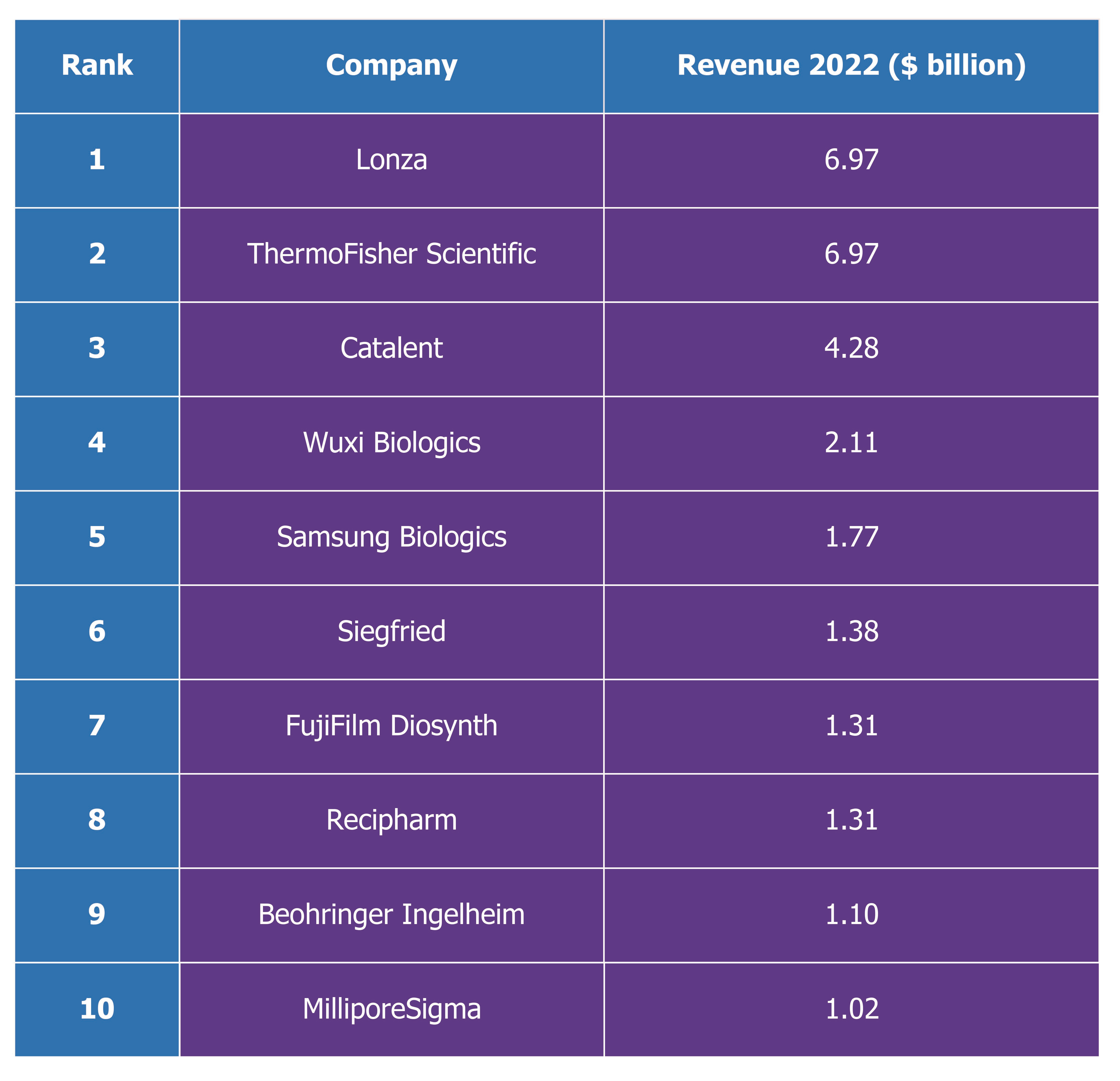
Big Pharma’s vacuum in drug development, production, and distribution competencies was filled by displaced employees working in the divested facilities, along with new entrants to the industry. A third-party service provider model grew rapidly, working on a fee-for-service basis, and became known as Contract Research Organizations (CROs) and Contract Development and Manufacturing Organizations (CDMOs).
Below are the top 10 CROs in 2022.
Below are the top 10 CDMOs in 2022.
Generic Drugs
For generic small-molecule products (copies of the originals), the U.S. Congress passed the Hatch–Waxman Act in 1984 to proactively encourage the entry of generics into the market.
The intention was to force down drug prices. Other countries, such as the United Kingdom, also made moves to ease the entry of generics, establishing requirements for generic substitution whenever possible.
Developing a supply chain for a small-molecule drug is comparatively straightforward. Small-molecule drugs are not overly sensitive to temperature variation and typically remain stable for between 2 and 5 years. The development of a copy of an originator drug (generic) requires the developing company to submit an abbreviated NDA and undertake bioequivalence studies. The aim of these studies is to prove that the drug produced by the generic supply chain has a clinical effect broadly equivalent to that of the originator drug. The FDA website has some useful information for nonspecialists.
Please, if you have questions or comments so far, do leave them in the comments section. Then I’ll know better what subscribers are interested in.